
How Arrest Warrants Work in Mitchell County
Texas Code of Criminal Procedure Article 15.01 calls a warrant of arrest a written command from a magistrate to a peace officer or other named person. Article 15.02 sets what the document must contain. Article 15.03 governs how it is issued. Together those statutes create the warrant record itself. Whether you can confirm one locally depends on the issuing court and the agency asked to serve it. Mitchell County publishes no public arrest-warrant search form. For felony or district-court process, contact the District Clerk and ask which file controls. The sheriff can answer a service-routing question, but its page does not promise a complete phone search of every court.
Article 15.02 Sets the Warrant Record Core
The statute requires the accused person's name or a reasonably definite description, the offense, and the magistrate's signature and office. Those are legal minimums. Mitchell County posts no sample entry online. There is no local warrant-number format, bond field, or status label on a public listing either. The statute sets the floor. The official Chapter 15 text spells out what a warrant must contain and how issuance works.
When you request a copy in Mitchell County, ask the clerk what identifier and date range will locate the executed process.
Arrest Warrants: What They Contain
A warrant copy differs from an online summary. One is paper. The court may hold the signed order, a supporting complaint or affidavit, and a service return. Mitchell County posts no sample entry, local warrant number, bond amount, or public status code for these records.
| Person or description | The identifying language required by the statute |
|---|---|
| Offense | The named offense supporting the order |
| Magistrate | Issuing judicial officer and office |
| Supporting record | Complaint or affidavit, subject to access rules |
| Service and return | Ask whether an officer executed the warrant and filed a return |
Mitchell County Felony Questions Start at the District Clerk
Mitchell County felony files run through the 32nd District Court. That is the main district-court route. The District Clerk sits at 349 Oak Street, Room 302, and lists (325) 728-5918. The District Judge's administrative office is in Sweetwater, while county courthouse contacts remain available for local records routing. Ask the clerk which case file to request and whether the document is public at its current stage. No district warrant-copy fee or live status service is posted.
How Warrants Get Served in Mitchell County
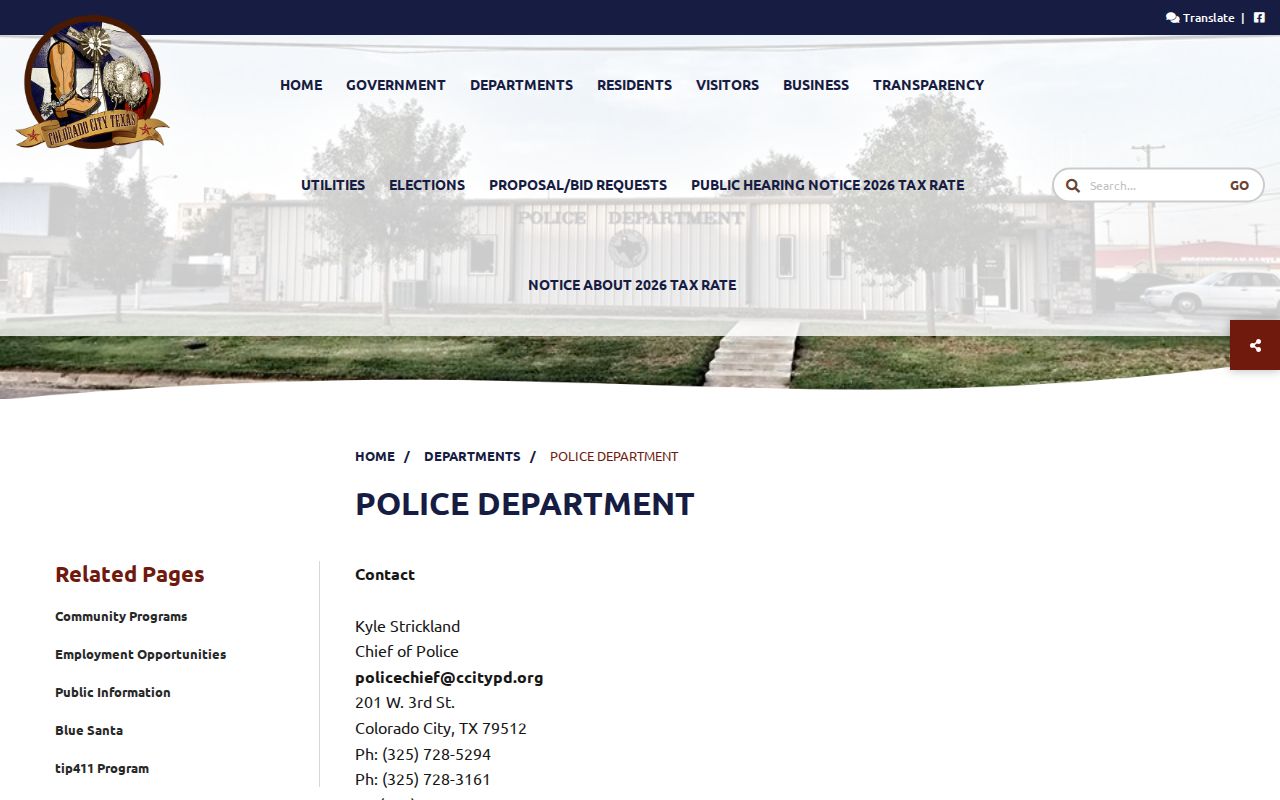
A warrant tells law enforcement to act. The court that issued it plays a separate role. The Mitchell County sheriff is the countywide law-enforcement contact, and Colorado City Police is a full-service municipal agency with its own published phones. Call the sheriff at (325) 728-5261 for a county service question. Colorado City Police lists (325) 728-5294 and (325) 728-3161. No county warrant-unit name appears. The county publishes no service allocation table, jail schedule, or bond window either. For case and bond instruction, use the court named on the process.
Municipal Officers and County Deputies Serve Different Roles
Colorado City Police works from 201 W. 3rd Street and posts an agency contact page. That page shows no warrant roster. It does not name who serves a particular order. The municipal court, at 180 W. 3rd Street, is the record route for city traffic and ordinance cases. The Mitchell County sheriff remains the county contact. The police department page lists agency contacts, so use it for a police question, not in place of the court docket.
For a city citation or missed court date in Mitchell County, call Municipal Court directly and ask what action the court records.
How a Missed Setting Differs From a New Arrest Warrant
An arrest warrant follows a magistrate's probable-cause process. A summons is different. It orders a person to respond or appear, without the same immediate arrest command. A bench-type warrant usually follows missed court process or noncompliance. The label matters. Ask the Mitchell County issuing clerk whether the paper is an arrest warrant, capias, capias pro fine, or another process.
| Paper or process | Why it may appear | First contact |
|---|---|---|
| Arrest warrant | Magistrate-issued order under Chapter 15 | Issuing court and sheriff |
| Summons | Notice to appear or respond | Court on the notice |
| Bench or FTA order | Missed appearance or court obligation | Court that set the event |
Federal and State Warrant Confirmation Are Different
For federal court purposes, Mitchell County sits in the Northern District of Texas, Abilene Division. Federal records sit outside any county warrant list. PACER is an electronic federal court-record system. It is not a local warrant database. An arrest warrant may not show fully in a public docket search. The U.S. Marshals courthouse page lists the Abilene office.
For federal docket access outside Mitchell County's courts, use PACER's official information page and follow the federal court's own process.
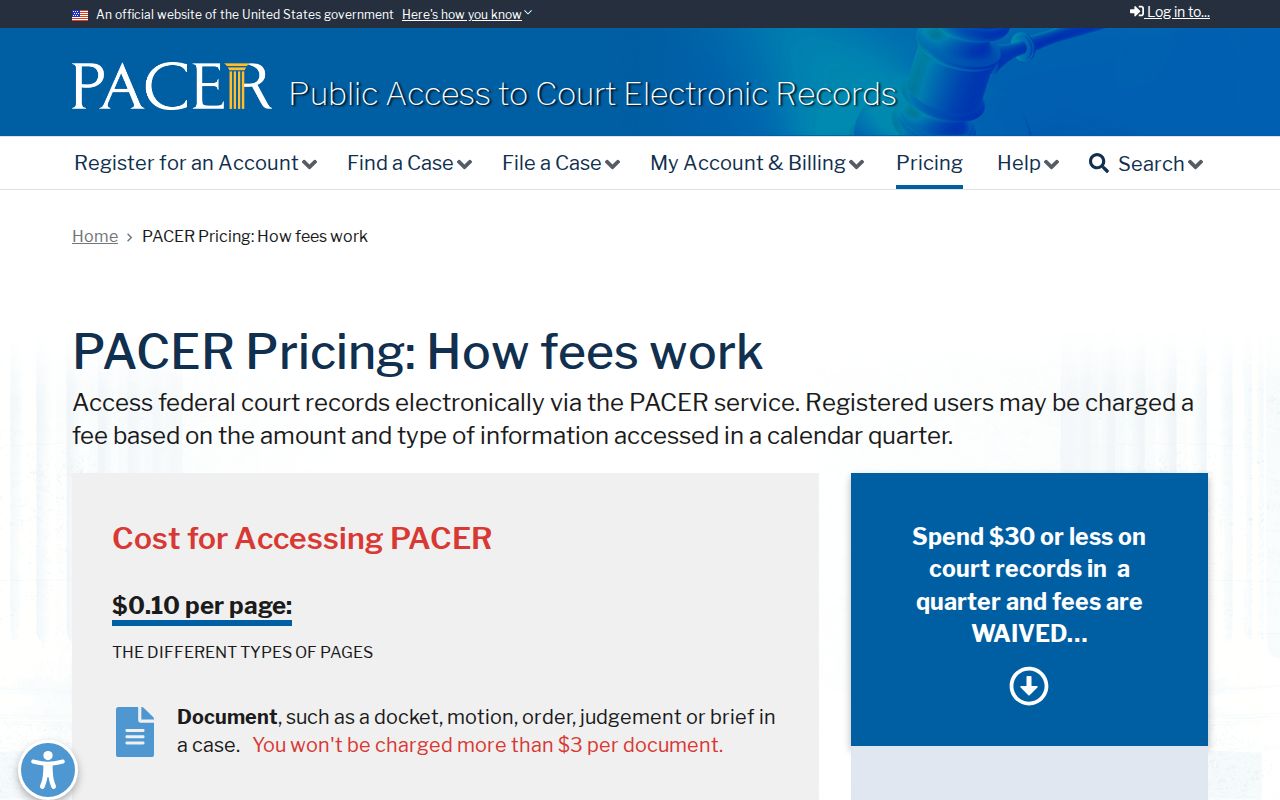
PACER explains its access fees, but it cannot confirm a Mitchell County or federal warrant by itself.
Arrest Warrants, Summonses, and Bench Warrants
A missed setting can produce court process different from a new arrest warrant. The wording matters. If the notice says bench warrant or capias, ask the issuing court what appearance or order was missed. For a new arrest warrant, ask which magistrate signed it. Ask which agency serves it, too. Keep felony questions out of the city or JP citation payment portal. The bench-warrant page covers the separate lower-court and missed-setting routes in Mitchell County.
Executed Warrant Access Has a Statutory Route
Texas law gives executed warrants a clear paper trail. Article 15.26 opens the file once a warrant has been served. The executed arrest warrant and its supporting affidavit become public information through the magistrate's clerk, open during normal business hours, though other confidentiality law can still block parts. One boundary is Family Code §58.010. It seals a child's arrest warrant along with the complaint or affidavit behind it. Government Code §552.108 adds another limit where release would interfere with an investigation or prosecution. A narrow request works best in Mitchell County. Ask by court and date for the executed warrant, the affidavit, the return, and any recall or disposition record. The Texas Public Information Act reaches existing records this way. It is not an instant search.
Handling an Arrest Warrant in Your Name
Once you learn a Mitchell County warrant carries your name, phone the issuing court. Ask if counsel should set an appearance, whether bond has been set, and where you must report. The court publishes no walk-in surrender schedule and names no accepted bond method. Also note that the Sheriff's Office hours are not jail intake hours.
Before an appearance: For a serious or unclear charge, speak with a licensed Texas attorney and confirm the court's instructions before going to an office.
Hang on to the cause number, the notice, and any docket entry that follows. The Mitchell County clerk can confirm when a recall takes effect and whether the serving agency has received it.